


Coffee fermentation: washed, natural, honey, anaerobic – what are the differences?
Fermentation is a metabolic process during which microorganisms, such as yeasts and bacteria, modify the composition of the coffee fruit. This transformation directly influences the aromas, body, as well as the type and level of acidity in the cup.
The degree of fermentation is a key parameter that producers seek to control with precision. Depending on the conditions and methods used, it is possible to significantly guide the aromatic profile of the coffee.
In coffee production, we often talk about "processing," which refers to post-harvest treatment methods. Among these processes, two main types of fermentation stand out: aerobic fermentation and anaerobic fermentation.

Aerobic or Anaerobic Fermentation: What are the differences?
The main difference between these two methods lies in the presence or absence of oxygen during fermentation. This factor influences the speed of sugar transformation, the development of microorganisms, and ultimately, the sensory profile of the coffee.
Aerobic Fermentation
Aerobic fermentation is the most common method. It takes place in the presence of oxygen, which allows naturally occurring yeasts and bacteria in the environment to develop and initiate fermentation.
This type of fermentation is used in traditional processes, such as washed, natural, or honey coffees.
Washed Coffee
In the washed process, coffee cherries are de-pulped, then the beans are placed in fermentation tanks for 24 to 48 hours. The duration varies depending on climatic conditions, particularly temperature and humidity.
This step allows the mucilage, a thin sugary layer surrounding the bean, to break down. The beans are then washed with water to remove residues and then dried on African beds, patios, or using mechanical dryers.
Washed coffees generally offer clean and precise aromatic profiles, with vibrant acidity and good clarity in the cup. Citrus notes, cane sugar, or yellow fruits are often found.


Honey Coffee
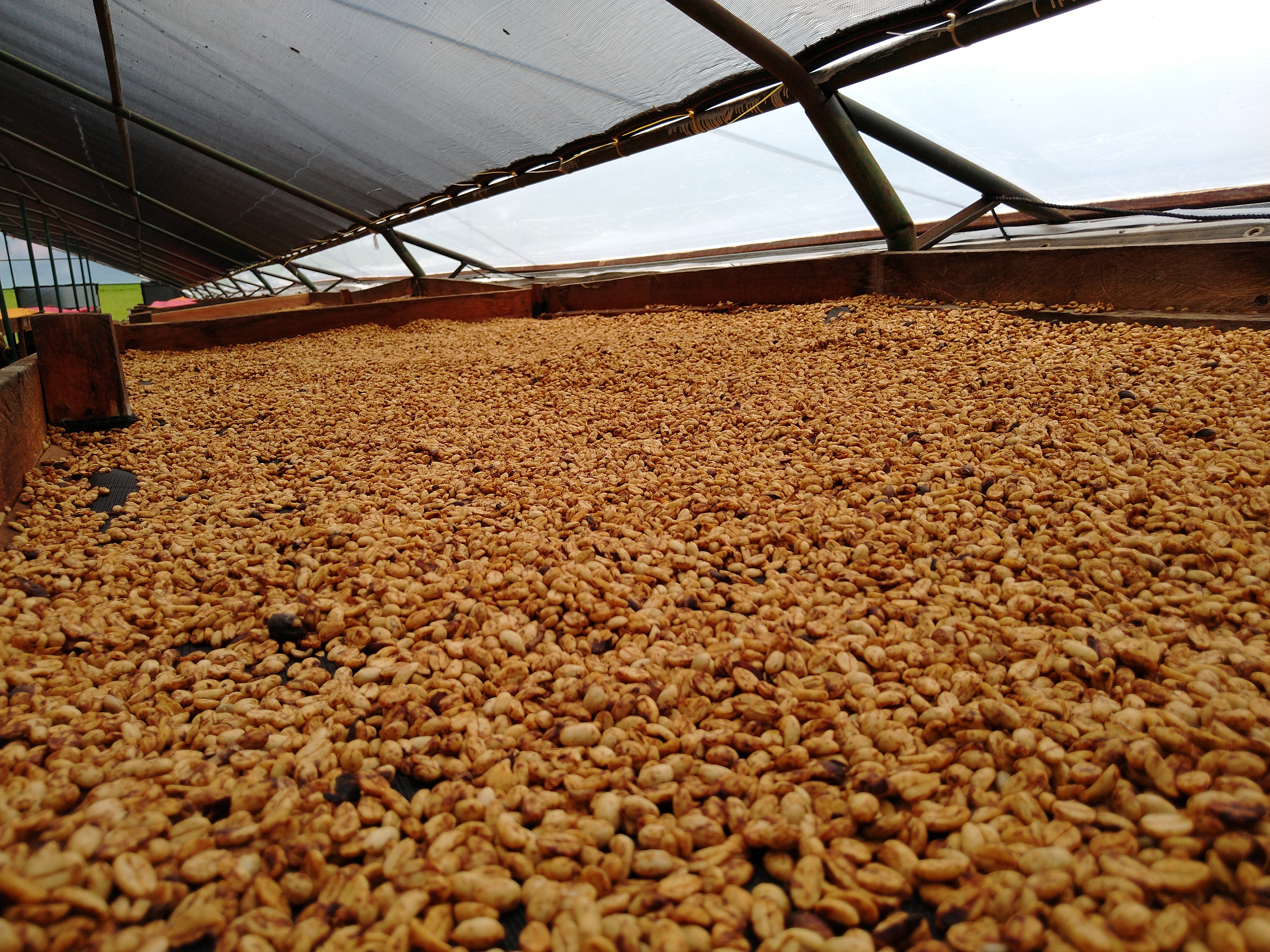
In the honey process, the pulp is removed but the mucilage is retained. The beans are directly put to dry, without a washing step.
The mucilage, rich in sugars, promotes a gentler and more progressive fermentation. The sticky beans must be regularly stirred to ensure homogeneous drying.
This process yields rounder and sweeter coffees, with a creamy body and more moderate acidity. Aromas often evoke honey, caramel, or dulce de leche.


Natural Coffee
In the natural method, the cherries are dried whole, without prior de-pulping. Fermentation and drying occur simultaneously.
This process generally produces more intense coffees, with a denser body and fruitier aromatic profiles. Notes of chocolate, ripe fruits, or praline are frequently found.

Anaerobic Fermentation
Anaerobic fermentation takes place without oxygen. The cherries or beans are placed in airtight tanks, barrels, or bags, to control the fermentation environment.
In some cases, oxygen is completely removed, as in carbonic maceration. This type of fermentation limits the diversity of microorganisms and allows for more precise control of the process.
Anaerobic fermentations are often longer and yield more complex and pronounced aromatic profiles. They can reveal novel notes, with more structured acidity, notably malic or lactic acids.


Key Takeaways
Fermentation plays a crucial role in the aromatic profile of coffee. Whether performed in the presence or absence of oxygen, it directly influences the final taste in the cup.
Understanding the different processes—washed, honey, natural, or anaerobic—allows for a better appreciation of the diversity of coffees and to refine one's preferences.
To explore these differences in practice, discover all our specialty coffees, processed using different fermentation methods and revealing the full richness of their aromatic profiles.
Share


